From Sword Art Online to Chainsaw Man: A Review of Illegal Recording Incidents in Malaysia

Sword Art Online: Ordinal Scale — 2017
In 2017, during the Malaysian screenings of Sword Art Online: Ordinal Scale, short clips recorded inside cinemas circulated online. Distributors and cinema operators posted reminders on social media urging audiences not to film or take photos during screenings, noting that such acts could affect future releases in the region.GSC Official Post

No Game No Life: Zero — 2017
During its Malaysian run in 2017, a moviegoer live-streamed the entire film via Instagram Live from inside the cinema — a serious piracy incident. The act was publicly condemned by distributors and cinema chains, and evidence was submitted to authorities. The case became a high-profile example of anime piracy affecting regional trust in local releases.GSC Official Post
 Kuroko’s Basketball: Last Game — 2017
Also in 2017, Kuroko’s Basketball: Last Game experienced illegal recording that later spread online. The leaked footage prompted distributors and cinema operators to reiterate that any recording could jeopardize future anime screenings in Malaysia.GSC Official Post

My Hero Academia: Two Heroes — 2018
In 2018, My Hero Academia: Two Heroes was impacted by multiple recordings that appeared on social platforms including Instagram stories. Regional distributors called for assistance in tracking illegal uploads and warned that such behavior harms trust between rights holders and the Southeast Asian market.GSCMovies Official Post
Chainsaw Man – The Movie: Reze Arc — 2025
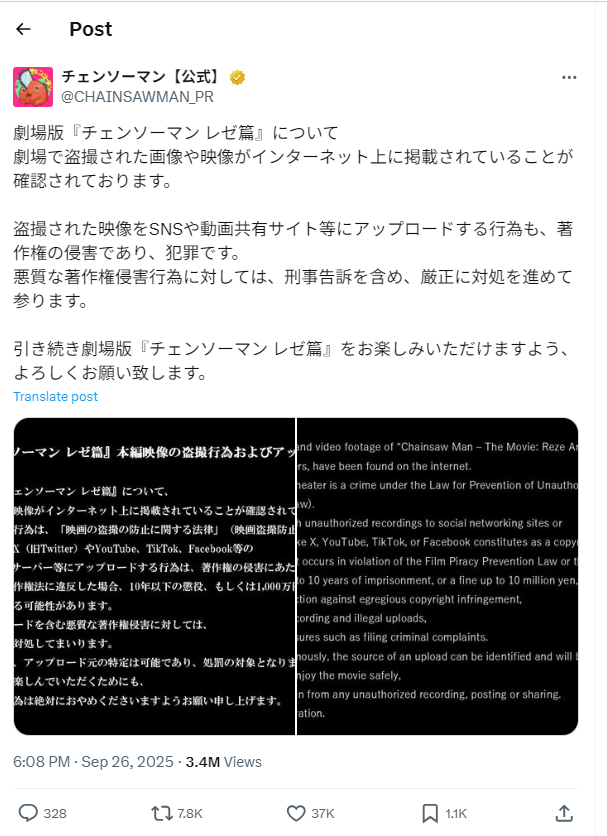
In 2025, the production committee confirmed that illegally recorded images and clips of Chainsaw Man – The Movie: Reze Arc circulated online. While the exact origin of the footage was not publicly confirmed, social posts from Malaysian viewers reported seeing people recording during local screenings, sparking renewed concerns about in-theater copyright enforcement.CHAINSAWMAN Official Post
Opinion on Cinema Recording of Anime Films
I want to emphasize that recording or live-streaming any part of a movie inside the cinema is illegal — even capturing the film’s title screen or end credits constitutes a violation. Such actions not only infringe upon the legal rights of the copyright holders and production team but also cause tangible financial losses and may lead Japan to lose trust in our country’s market.
Once that trust is damaged, the ultimate victims will be local anime fans — we may lose the opportunity to watch official Japanese anime film releases in Malaysia. If you witness someone recording or live-streaming inside a cinema, please notify the cinema staff immediately or use the official reporting channels provided. Cooperation between cinemas, distributors, and audiences is vital to maintaining a healthy and respectful movie-going culture.
Therefore, I urge everyone: do not record or photograph any part of the movie, not even the title screen or ending sequence. If you wish to capture memories, take photos of your movie ticket (if available), cinema decorations, official merchandise, or posters instead — all of which are legitimate and respectful ways to celebrate the experience. Let us continue to support official releases and respect creators, so that more wonderful anime films can be shown regularly and legally in Malaysia.
About the Author
Steven Khoo is an anime enthusiast with over 15 years of viewing experience, tracking Japanese anime and film releases in Malaysia, including cinema distribution, platform streaming, and industry trends. He organizes and reports information based on his interest, providing accurate and easy-to-understand content for readers.
📢 Disclaimer:
Information compiled from industry analysis and public sources. Film release schedules and strategies are subject to official announcements by local distributors and cinema chains like GSC/TGV.
Image Source: Internet
All images are used for informational only. Copyright belongs to their respective owners.
 The List of Anime Movies Released in Malaysia



Comments (0)
No comments yet. Be the first to comment!